
Filling a void – Selangor sale underlines Malaysia’s new role in Asian bloodstock trade


January 22, 2026
While the spotlight this week is firmly on New Zealand Bloodstock’s centenary Karaka sale, a quieter but significant shift in the Asian thoroughbred market will take place in Malaysia, where the Selangor Turf Club is set to launch its maiden Community Horse Project online sale.
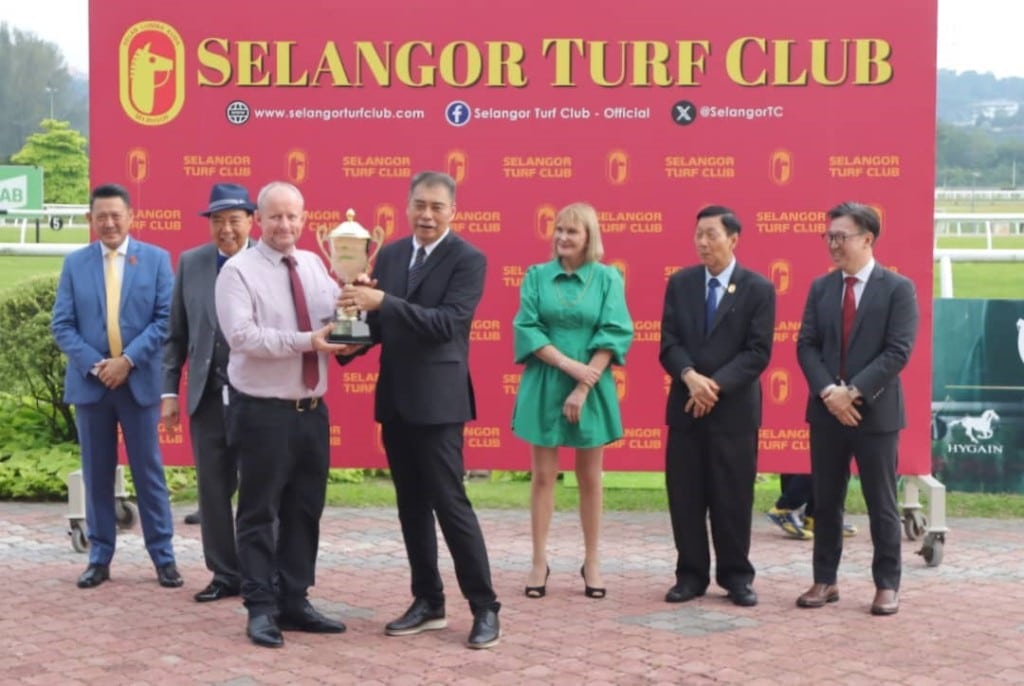
With Singapore racing now consigned to history, Malaysia is beginning to show clearer intent about what comes next for thoroughbred racing in southeast Asia.
While this week’s focus in the southern hemisphere is firmly on New Zealand Bloodstock’s 100th National Yearling Sale at Karaka, a landmark step in the evolution of the Asian thoroughbred market will quietly take place when horses go under the hammer online for the Selangor Turf Club.
After months of behind-the-scenes work, Selangor will next week conduct its maiden Community Horse Project online sale, an initiative designed not just to source runners, but to actively grow and stabilise Malaysia’s horse population at a time when the regional supply chain has been reshaped by the closure of racing in Singapore and, to a lesser extent, Macau.
The sale catalogue will feature 53 Lots, with the broader objective of encouraging new ownership, replenishing numbers and ensuring Malaysia can sustain its weekly racing programme in Kuala Lumpur without relying on legacy pathways that no longer exist.
Sires represented include Hellbent, Russian Revolution, Lucky Vega, Hanseatic, Jonker, Portland Sky and Ardrossan.
Magic Millions’ David Chester, along with Inglis’ international business development manager Nicky Wong and colleague James Price, will attend Monday’s on-farm inspections in the Cameron Highlands in West Malaysia. New Zealand Bloodstock representatives would almost certainly also have been present had the online sale not clashed with the company’s centenary Karaka auction.
Selangor Turf Club’s chief executive Mike Fong and Captain Tan Tiang Huat, who bought a one-year slot in the inaugural NZB Kiwi for 2025, have been instrumental in getting the Community Horse Project off the ground.
Chester says of the 800 or so horses in training at the Selangor Turf Club, about 25 per cent leave the pool annually, and replenishment of the equine population is required to sustain the weekly racing schedule in Kuala Lumpur.
He compared Selangor’s Community Horse Project sale to that of the Hong Kong Jockey Club’s International Sale, which was started three decades ago as a way for owners to source horses without having to travel overseas into an unfamiliar auction environment.
“These horses used to be supplied from the cast-offs from Singapore and now they’ve got to import horses from Australia or New Zealand or somewhere to make up the numbers to keep racing going,” Chester told The Straight.
“This certainly is a step in the right direction because what this is doing is introducing better horses to Malaysia.”
Once an Asian racing outpost, the demise of the sport in neighbouring Singapore in October 2024 and Macau that same year has made the Malaysian industry increasingly important as a trade market for Australasia.
“Malaysia has been the one that everyone’s been hoping can pick up that sort of market (share that was Singapore and Macau),” Wong said.
“And it seems in the last two years, they have been picked up quite a lot, especially in the last year. Just from our sales’ perspective, they have been buying across all our live sales and the digital sales with over 100 horses bought (online), which is a significant number to pick up, since the two major jurisdictions have closed.”
At least 24 races worth up to 200,000 ringgit (A$72,000) will be run exclusively for graduates of the sale, much like the races conducted by Magic Millions, Inglis and NZB for their sale graduates.
The back-end technology powering the Inglis Digital online platform will be used to conduct the Selangor sale, with bidding opening on Monday and closing on January 30.
Horses for the Community Horse Project sale have been purchased from Australian and New Zealand yearling and two-year-old sales, while a number of others have also been acquired either online or privately.
Their education continued with respected horse people in Australia before being shipped to Malaysia, an added cost borne by the club that it hopes will encourage more parties to become involved as owners.
However, it hasn’t all been smooth sailing for organisers of the sale, with the delayed arrival of 10 horses from New Zealand who were to be offered as part of the catalogue.
It is understood that authorities have blocked the movement of horses across the Singapore border through the Malaysian province of Johor Bahru.
It is unclear what the rationale is for closing the entry point for livestock but The Straight understands that a resolution is expected in the near future.
In the meantime, a flight organised by Equine International Airfreight carrying 31 racehorses from New Zealand directly to the Malaysia capital of Kuala Lumpur is scheduled to depart from Auckland on February 2.
The Malaysia Airlines cargo flight will include the 10 two-year-olds who were to be auctioned next week.
They will now go under the virtual hammer at a later date, most likely in late February.
The flight will also import other New Zealand Bloodstock Ready to Run-purchased horses to Malaysia for Selangor owners and trainers.
A small number of tried horses will also be on the same flight.
Equine International Airfreight’s Cameron Croucher was approached about whether he could help in getting the New Zealand-based horses to Malaysia while the Singapore-Malaysia border impasse continues.
“I contacted different airlines and was able to secure a charter flight direct from Auckland to Kuala Lumpur without stopping in Singapore for a plane that will take a maximum of 31 horses, and we contracted that airline to do the flight,” Croucher said.
Croucher encountered similar scenarios whereby he was unable to get horses from Australia to Korea but New Zealand Airfreight was able to charter a flight from New Zealand, so horses that were to fly with his company were instead transported with a competitor.
“So, the horses shifted from Australia to New Zealand to join the consignment that was going from New Zealand to Korea because we realised that those horses needed to get to Korea,” he said.
Source : Tim Rowe
